
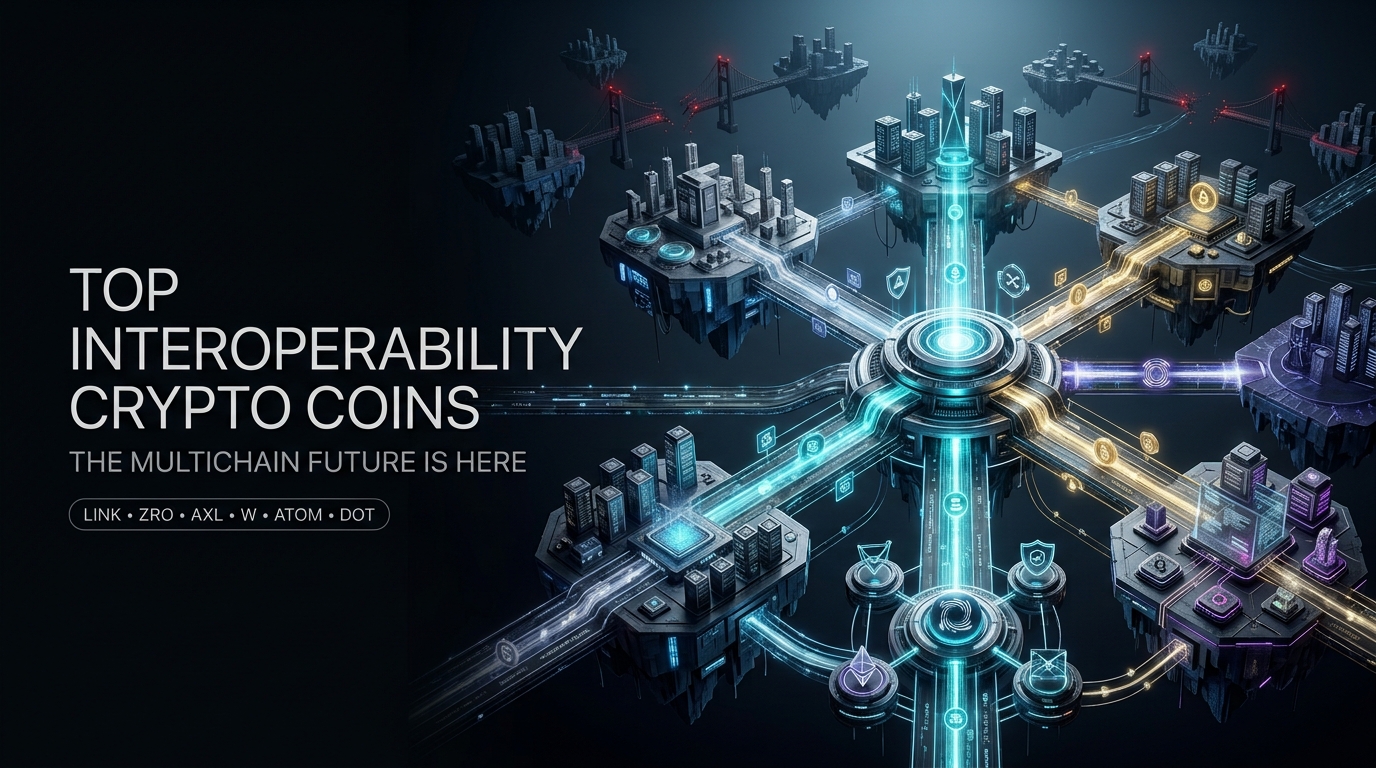
As of Wednesday, July 22, 2026, the dream of a single, all-powerful blockchain dominating the entire digital world has officially crumbled. For years, we watched developers build isolated ledger islands, trapping billions of dollars of liquidity in fragmented networks. Overnight, the market has realized that the future is not a single database. It is an intricate, vast web of thousands of connected chains. We are no longer debating which chain wins. We are debating how they talk to each other. But as security vulnerabilities continue to exploit legacy systems for millions of dollars, how do we safely unite this fractured ecosystem?
It was easy to believe in the "one chain to rule them all" thesis. In the early days, back when we first started tracking these markets in 2017, the promise of a single blockchain solving every digital coordination problem was intoxicating. Everyone wanted a simple path. We wanted one token, one language, and one community. And honestly, that excitement made complete sense. Why deal with the friction of multiple networks when you could build everything in one playground?
But reality is messy. Blockchains are specialized tools. Some prioritize cheap transactions. Others focus on absolute security or decentralization. Because of this natural trade-off, we now live in a multichain reality. Users want the yield on one network, the speed of another, and the security of a third. This has created a massive, fractured landscape. Moving assets between chains remains slow and highly insecure. It is a major roadblock to adoption.
According to CoinGecko data, billions of dollars are locked across dozens of Layer 1 and Layer 2 networks. Yet, the legacy infrastructure connecting them remains a primary target for hackers. Traditional bridges are centralized honey pots. They are fragile and prone to catastrophic failure. For a deeper look into how this connects to real market impact, this breakdown is worth your time: Top Infrastructure Cryptos Powering Web3's Future: Beyond the Hype of Memecoins
So what does this mean for my portfolio? Should I avoid multi-chain projects altogether? Is my capital safe if it crosses a bridge? These are the exact questions we are asking ourselves this morning. The answer isn't to retreat into isolation. That would be a mistake. The answer is to identify the infrastructure protocols building the secure highways of Web3. We need to look at the protocols that actually solve the underlying routing problem.
But here's the uncomfortable truth. The real battle is no longer about moving simple tokens. It is about cross-chain contract calls. Soon, you won't even know which blockchain you are using. The application layer will abstract it all away. Imagine using an application that leverages the security of Bitcoin, the speed of Solana, and the liquidity of Ethereum without ever changing networks. Chainalysis data reveals that cross-chain contract calls are growing exponentially. Developers are moving away from simple bridges and toward native interoperability. This represents a paradigm shift.
The Top Interoperability Coins to Watch
Below, we break down six of the most promising interoperability protocols that are quietly solving the fragmentation crisis of Web3.
1. Chainlink (LINK)
Chainlink (LINK) is the undisputed heavyweight of the decentralized oracle space, and its Cross-Chain Interoperability Protocol (CCIP) is setting the standard for institutional message passing. It secures billions in value by allowing traditional financial institutions and decentralized networks to pass data and tokens securely. It is the gold standard for enterprises entering the space.Key Strength: It is backed by a massive, battle-tested node network and enjoys unprecedented trust from traditional finance giants, making it the primary choice for enterprise-grade cross-chain communication.
One Risk to Watch: The fee capture model of CCIP is still maturing, meaning token value accrual may lag behind the actual utility of the protocol.
2. LayerZero (ZRO)
LayerZero (ZRO) is an omnichain interoperability protocol designed for lightweight message passing across a vast array of blockchains. It enables applications to communicate seamlessly without requiring intermediate chains, reducing latency and complexity for developers. It eliminates the need for trusted third-party bridges entirely.Key Strength: Its modular design allows developers to choose their own security configurations, balancing speed and safety to fit specific application needs.
One Risk to Watch: Decentralized verifier configurations can sometimes be misconfigured by developers, creating potential security vulnerabilities if not managed with extreme care.
3. Axelar (AXL)
Axelar (AXL) delivers secure cross-chain communication through a decentralized proof-of-stake network built specifically to route messages and translate languages between different blockchains. It acts as a universal translator, connecting Ethereum, Cosmos, and EVM-compatible chains with ease. It operates as a public, permissionless network of validators.Key Strength: Axelar utilizes a dynamic validator set that provides robust, decentralized security, ensuring that no single entity can compromise message transit.
One Risk to Watch: Axelar faces intense competition from larger, venture-backed alternatives, requiring rapid developer adoption to maintain its market share.

4. Wormhole (W)
Wormhole (W) is a generic message-passing protocol that connects high-value blockchains, enabling decentralized apps to share data, assets, and governance commands. It has become a foundational layer for multi-chain liquidity, particularly within high-throughput DeFi networks. It serves as a vital bridge between EVM and non-EVM environments.Key Strength: It features incredible speed and deep integration within major high-throughput DeFi ecosystems, making it a favorite for rapid asset transfers.
One Risk to Watch: Wormhole's historical vulnerability to smart contract exploits demands constant vigilance and hefty security spending to reassure wary users.
5. Cosmos (ATOM)
Cosmos (ATOM) pioneered the multichain vision with its Inter-Blockchain Communication (IBC) protocol, allowing sovereign blockchains to trade assets and data natively. It remains one of the most mature and battle-tested frameworks for building independent yet interconnected application-specific chains. It represents the gold standard of trustless cross-chain transport.Key Strength: The IBC protocol is incredibly secure, completely decentralized, and has processed billions of dollars in volume without a major protocol-level hack.
One Risk to Watch: The ATOM token struggles with value capture, as sovereign chains built using Cosmos SDK are not forced to use ATOM for fees or security.
6. Polkadot (DOT)
Polkadot (DOT) uses a central relay chain to coordinate security and message-passing among various independent parachains. Its custom-built Cross-Consensus Message Format (XCM) allows parachains to exchange rich data payloads with total security. It provides an all-in-one framework for shared security.Key Strength: The shared security umbrella of the central relay chain guarantees that connected parachains do not need to bootstrap their own security validators.
One Risk to Watch: The complexity of the Polkadot ecosystem has slowed down developer onboarding, creating a steep learning curve that favors simpler competitors.
The Coin View Take
We have been watching this sector closely since the earliest days of simple atomic swaps. In our view, the market is severely underestimating the value of foundational communication protocols. Most retail investors chase high-yield memecoins. They look for overnight riches. But the real, sustainable value is accruing at the plumbing level of the industry. Without these protocols, the entire space falls apart.
We think that the winners of this cycle will not be the isolated blockchains, but the networks that bind them together. Our read on this is clear: if you are not exposed to the interoperability layer, you are missing the glue that holds the entire decentralized web together. What we find most interesting here is how these protocols are shifting from simple bridge models to secure, decentralized consensus-driven messengers. This is where real wealth will be created.
We believe the market will eventually reward protocols that prioritize security over raw speed. Bridges that take shortcuts will continue to be exploited. But robust networks like those utilizing advanced consensus mechanisms will rise to the top. For a deeper look into how this connects to real market impact, this breakdown is worth your time: Blockchain Consensus Mechanisms Explained: How Networks Agree on Trust
This shift mirrors the early days of the traditional internet when fragmented networks eventually merged into the global TCP/IP network. In crypto, we are moving from the local intranet phase to the unified global network phase. Now whether this is realistic to achieve in the next twelve months without any security hitches is a completely different conversation. But the trajectory is undeniable. The era of isolated chains is dead.
Because in crypto, infrastructure always precedes the application mania. The road must be paved before the cars can race. Projects rise. Projects fall. Communities disappear overnight. The market rewards adaptation, and those who recognize the shift from isolated ecosystems to interoperable networks will be positioned well for the next wave of adoption.
As we look ahead, the barriers between blockchains are dissolving faster than ever. The future is connected, silent, and incredibly fast. We are ready for the multichain era; are you?
⚠️ Disclaimer: This list is for informational purposes only and does not constitute financial advice. Always conduct your own research before investing in any cryptocurrency.
✍️ About The Coin View Team
The Coin View Team is a group of independent crypto analysts and writers dedicated to cutting through the noise of the digital asset industry. We cover Bitcoin, blockchain technology, DeFi, and the future of money — with no hype, no fear tactics, and no financial agenda. Just the real story. Follow us on X (Twitter) for daily crypto insights.
⚠️ Disclaimer: The content published on The Coin View is for informational and educational purposes only. It does not constitute financial advice, investment advice, or a recommendation to buy or sell any cryptocurrency or digital asset. Cryptocurrency markets are highly volatile and unpredictable. Past performance does not guarantee future results. Always conduct your own research and consult a qualified financial advisor before making any investment decisions. — The Coin View Team, thecoinview.com
Post a Comment